Savings
UK Christmas Savings Tracker: Gift List Plus January Bills
List every gift and Christmas cost with a budget cap, save a little each week from autumn, and set aside a January buffer for rent, council tax, and energy so December cheer does not become February stress.
This article is general money-management information, not personalised financial advice. For free impartial guidance, see MoneyHelper.
Who this is for
This is for UK households — solo or sharing — who know December gets expensive and January feels worse.
You want a simple Google Sheets plan: who you are buying for, what you can spend, how much you have saved so far, and what bills will still land after the holidays.
No shame spiral. Just a clear list and a weekly transfer.
Why start before December
Starting in September, October, or early November gives you more paydays to spread the cost. A smaller weekly amount beats a single panic shop in mid-December on a credit card you are still paying in March.
Early planning also surfaces the quiet costs people forget: wrapping, postage, school fairs, office Secret Santa, travel home, food shop uplift, and New Year plans.
January is when many UK bills feel heavy at once — rent or mortgage, energy, and for some households the return of council tax after the February/March gap if you pay over 10 months. A Christmas tracker that ignores January is only half a plan.
Gift list columns that actually help
Keep one row per person or per cost. Suggested columns:
- Person / item (Mum, teacher gift, tree, travel)
- Category — gift / food / travel / decorations / charity / other
- Idea
- Budget (£)
- Actual spent (£)
- Bought? (yes/no)
- Notes (size, link, shared gift with sibling)
Optional: “from whose pot” if partners split categories, and a hard household Christmas cap at the top of the sheet.
Total the Budget column first. If the sum scares you, cut ideas before you cut savings. Then track Actual so you see drift early — not on Christmas Eve.
Worked mini-example (fictional only):
| Person / item | Category | Budget (£) | Actual (£) | Bought? |
|---|---|---|---|---|
| Partner | Gift | 60 | 55 | Yes |
| Parents (shared) | Gift | 80 | No | |
| Food shop uplift | Food | 100 | No | |
| Travel home | Travel | 70 | 70 | Yes |
| Total so far | 310 | 125 |
A sinking fund for January bills
Treat January as its own line, not an afterthought.
Common UK January pressures:
- Rent or mortgage (same as every month — but cash is tighter after December)
- Energy bills (winter usage)
- Council tax (if your instalments restart or you feel the gap after the 10-month cycle)
- Credit card balances from December
- Subscriptions and annual renewals that hit in January
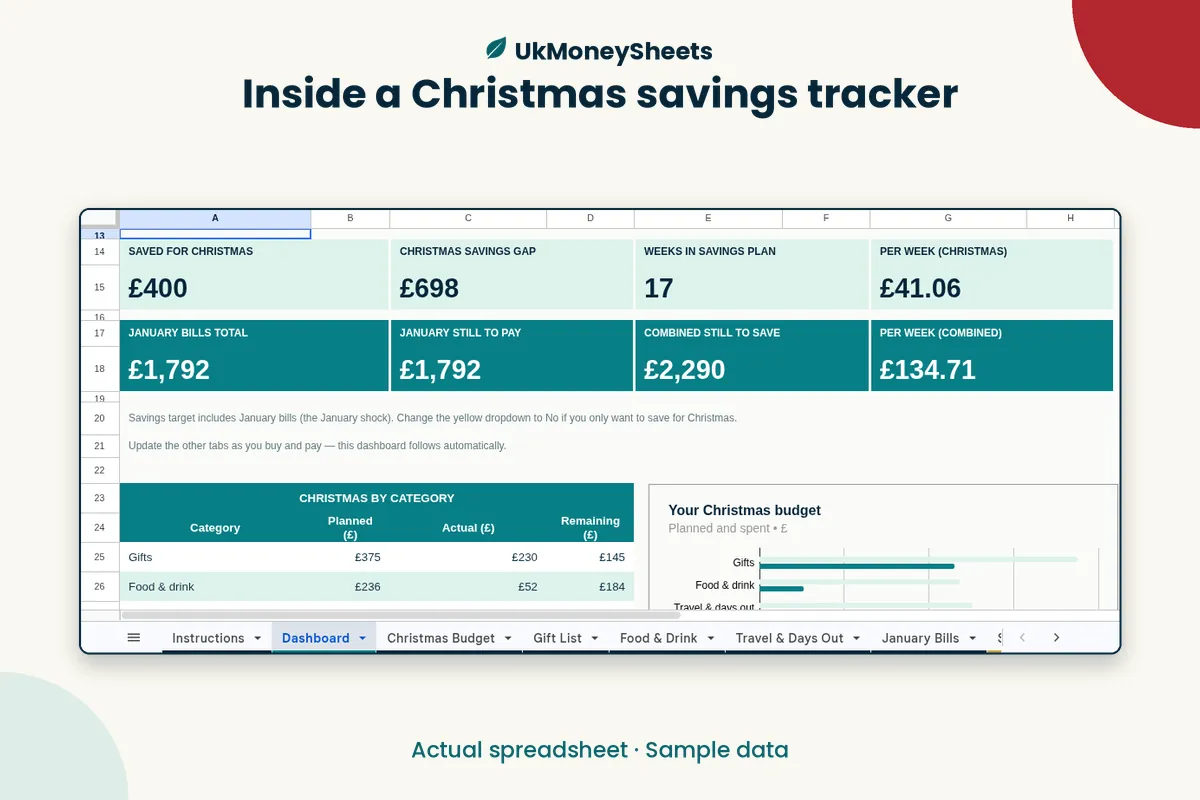
Pick a round January buffer target (even £100–£200 helps; larger if you know January is brutal). Divide by the weeks left until Christmas or until 1 January. Transfer that amount to a named savings pot or a labelled row on the sheet every payday.
Gifts and January buffer compete for the same money. Decide the split on purpose: for example 70% gifts/food/travel, 30% January — then adjust once, not every time you see a sale.
Weekly rhythm from autumn
Pick a 15-minute slot each week (Sunday evening works for many):
- Add anyone you forgot to the gift list
- Update Actual spent from your banking app
- Move this week’s Christmas + January transfers
- Check remaining budget vs weeks left
- If you are over on gifts, cut one idea or reduce a flexible category — do not raid the January buffer first
From early December, freeze new “nice to have” names on the list unless something comes off.
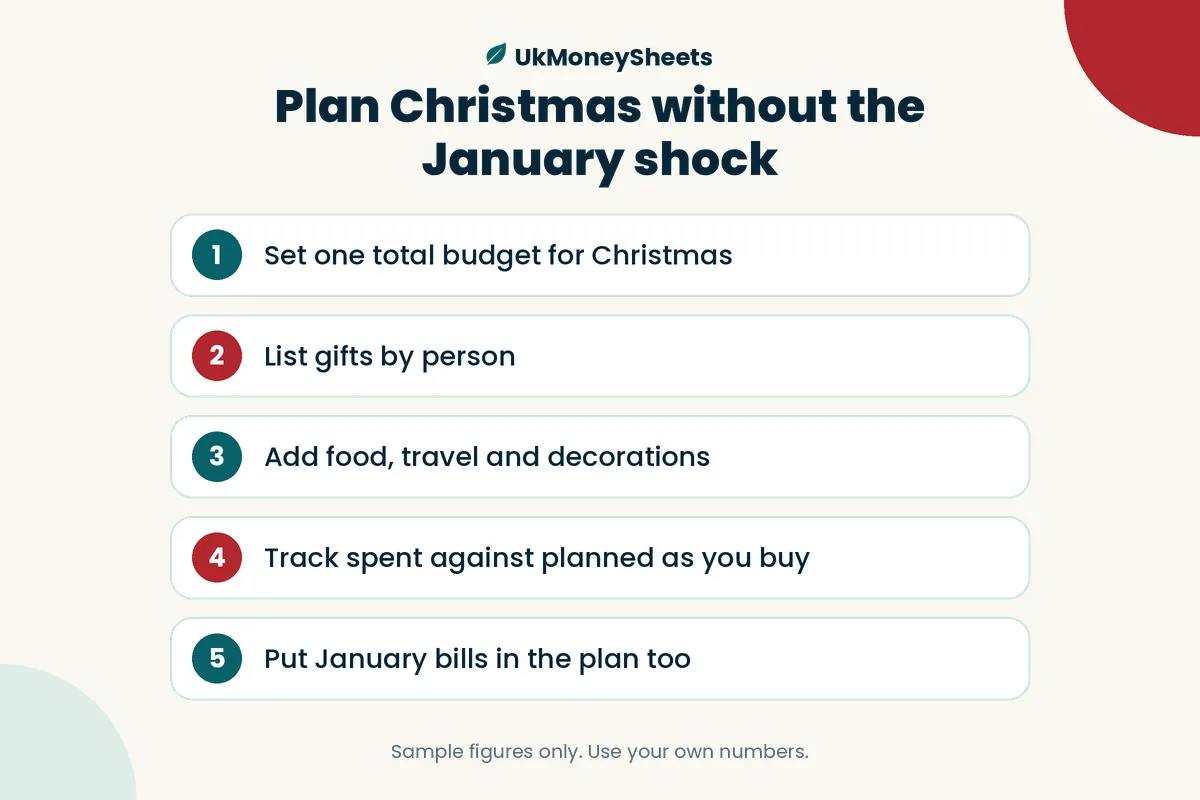
How the UkMoneySheets Christmas tracker fits
If you want a ready-made layout, UkMoneySheets sells a UK Christmas Savings Tracker 2026 Gift List, January Bills Google Sheets.
It is Google Sheets (not Excel). You typically get a PDF with the Sheets link, then File → Make a copy into your own Drive.
Pair it with a year-round UK Monthly Budget Spreadsheet if you want the Christmas sinking fund to sit inside your normal monthly plan.
A template holds the numbers. The weekly transfer is what cushions January.
FAQ
When should I start a Christmas savings tracker?
As soon as you can — ideally by early autumn. Starting in November still helps; starting on 1 December is better than not tracking at all.
Should Christmas go on the credit card?
Only if you already have a written payoff plan inside your January buffer. If December spend becomes unplanned revolving debt, the tracker’s job is to shrink the list, not to justify the card.
Can I share the sheet with a partner?
Yes — Google Sheets is built for one live file. Agree a total cap and who buys what so you do not double-buy.
Is this financial advice?
No — organisation and planning ideas only.
Soft next step
Write a household Christmas cap and a January buffer target today. Add every name on your gift list. Schedule the weekly transfer.
If you want a UK-ready Google Sheet for gifts plus January bills, grab the UK Christmas Savings Tracker from UkMoneySheets on Etsy, make your own copy, and keep the autumn habit going.
December is brighter when January is already funded.
Disclaimer
Not tax or financial advice. Rules, allowances and product names change — GOV.UK is the source of truth. Confirm the live Etsy listing before purchase. UkMoneySheets templates are Google Sheets only (never Excel), delivered as a PDF with a copy link, prices in GBP.
Browse UkMoneySheets on Etsy