Property
Mortgage Overpayment Calculator: See Interest Saved in Google Sheets (UK)
Enter your balance, rate, term, and a planned extra payment in a Google Sheet to compare “stick to the schedule” versus overpaying — then check your lender’s overpayment limits and any early repayment charge before you send money.
This article is general information, not personalised financial or mortgage advice. Your mortgage offer rules. For free impartial guidance see MoneyHelper. Your home may be repossessed if you do not keep up repayments.
Who this is for
This is for UK homeowners on a repayment mortgage who are curious whether a regular or one-off overpayment is worth it — and who want a simple Google Sheets comparison before speaking to their lender.
It is not a remortgage application, a product recommendation, or a promise of a fixed pound figure you will save.
What an overpayment changes (high level)
On a typical capital-and-interest mortgage, each monthly payment covers interest on the outstanding balance plus some capital. Pay extra capital and, if the lender applies it to the balance (confirm how they treat overpayments):
- The balance falls faster
- Future interest is charged on a smaller amount
- You may finish earlier or keep the same end date with lower monthly payments later — depending on what you ask the lender to do
A spreadsheet’s job is to show a side-by-side estimate of schedule vs overpay using your inputs. It does not override your mortgage conditions.
Inputs to track
Gather these from your latest mortgage offer, annual statement, or lender app:
- Current outstanding balance (£)
- Interest rate (and whether fixed, tracker, or SVR)
- Remaining term (years/months)
- Current contractual monthly payment
- Planned overpayment — monthly extra, annual lump sum, or both
- Overpayment allowance / ERC rules from your offer (see caveats below)
- Start date for the comparison
Then build or use a sheet that projects:
- Balance over time with no overpayment
- Balance over time with your planned extra
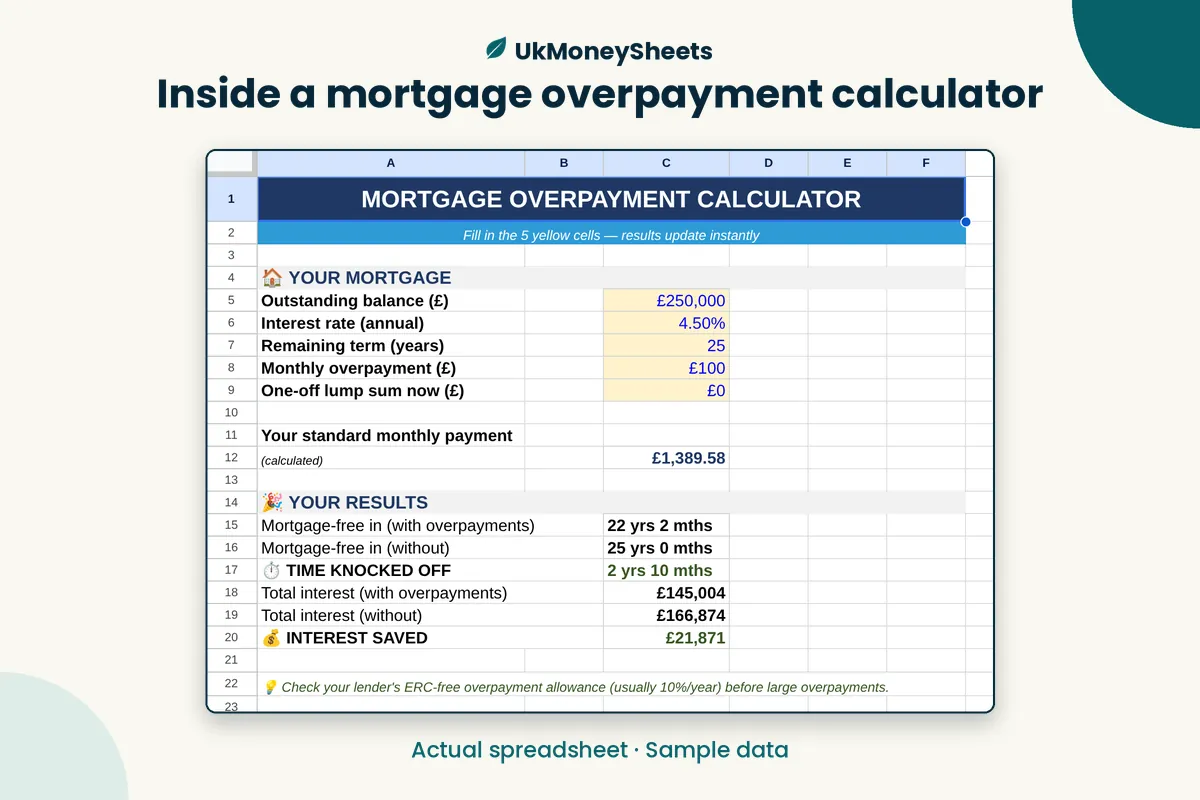
- Total interest in each scenario (estimate)
- Months or years difference (estimate)
Worked mini-example (entirely fictional — not your mortgage, not a quote):
| Input | Example figure |
|---|---|
| Balance | £180,000 |
| Rate | 4.5% (illustrative) |
| Remaining term | 22 years |
| Extra | £150 / month |
A calculator might show the overpay path finishing sooner and with less total interest in that model. Those outputs are illustrative only. Change the rate or balance and the picture changes. Never treat a sheet’s “interest saved” line as a guarantee.
Caveats: ERCs, allowances, and opportunity cost
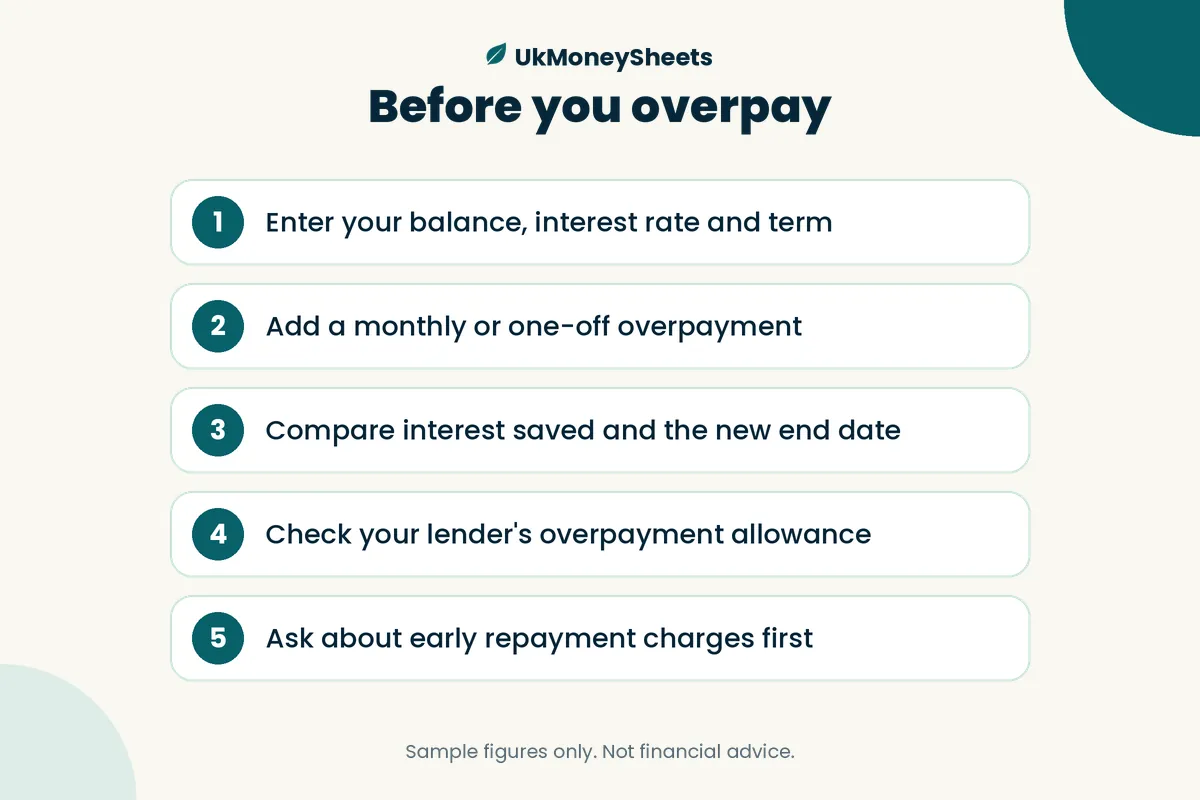
Before you overpay:
1. Read your mortgage offer
Many fixed deals allow overpayments up to a yearly limit (often discussed online as around 10% of the outstanding balance — your percentage and reset date may differ). Some lenders allow more; some products differ. Exceeding the allowance during a charge period can trigger an early repayment charge (ERC).
2. Ask the lender how they apply extras
Confirm whether overpayments reduce the balance immediately, whether the contractual payment stays the same, and how the annual allowance is calculated and reset.
3. Compare other uses of the money
High-interest debt, an emergency fund, or pension contributions can matter more than shaving a cheap fixed mortgage. MoneyHelper’s homes guidance is a sensible place to read around remortgaging and charges — start at MoneyHelper and your lender’s own overpayment pages.
4. Models simplify
Rate changes at the end of a fix, fees, payment holidays, offset features, and part-and-part products can make a simple sheet wrong. Use it as a conversation starter, not a completion statement.
How the UkMoneySheets overpayment calculator fits
UkMoneySheets sells a Mortgage Overpayment Calculator for Google Sheets | Interest & Payoff Comparison.
It is Google Sheets (not Excel). Delivery is typically a PDF with a Sheets link so you can File → Make a copy and plug in your figures.
Use it to compare scenarios. Then confirm every live payment with your lender.
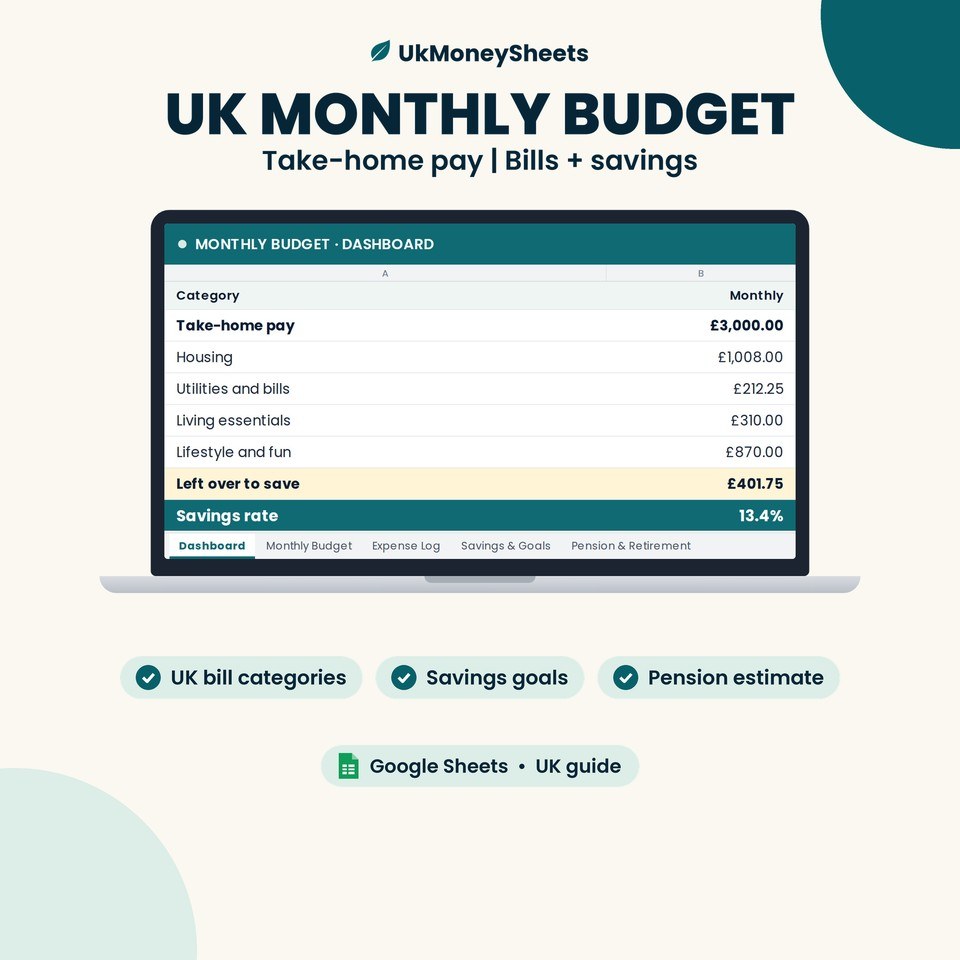
Related: pair with a UK Monthly Budget Spreadsheet so the overpayment amount is money you have actually planned for.
FAQ
Will overpaying always save me money?
It can reduce interest if extras hit the balance and no ERC wipe-out applies — but it is not always the best use of cash. Compare emergency savings, costlier debts, and your deal end date.
What is an early repayment charge?
A fee some lenders charge if you repay more than allowed (or leave a deal early) during a restricted period. Check your offer; do not rely on a generic “10% rule” blog.
Can a Google Sheet tell me the exact interest I will save?
No. It can estimate under assumptions you type in. Your lender’s illustration and rules are authoritative.
Is this financial advice?
No. Education and organisation only.
Soft next step
Find your outstanding balance, rate, remaining term, and overpayment rules in your mortgage documents. Run a cautious comparison in a sheet.
If you want a ready-made Google Sheets layout for interest and payoff comparison, get the Mortgage Overpayment Calculator from UkMoneySheets on Etsy, make your own copy, and clear any large payment with your lender first.
Disclaimer
Not tax or financial advice. Rules, allowances and product names change — GOV.UK is the source of truth. Confirm the live Etsy listing before purchase. UkMoneySheets templates are Google Sheets only (never Excel), delivered as a PDF with a copy link, prices in GBP.
Browse UkMoneySheets on Etsy